












.png)
![New Nav Bar - New Tag [Suppliers] PNG](https://www.tussell.com/hubfs/New%20Nav%20Bar%20-%20New%20Tag%20%5BSuppliers%5D%20PNG.png)

%20v1.png)











Finding government tenders and contracts is not as simple as checking one public sector portal.
Live tender opportunities are usually published through official procurement portals such as Find a Tender, but that is only one part of the market.
Suppliers can also track pre-procurement notices, contract award notices, framework activity and published invoice data to build a fuller picture of public sector demand.
This guide explains where to find government tenders and contracts, what different notice types mean, and why relying on tender alerts alone can leave major gaps in your public sector sales pipeline.
Skip ahead to read about:
- What types of government tenders and contract notices can you track?
- Which tenders, contracts and invoices are government bodies required to publish?
- How to find tender and contract notices
- Why tracking tenders might not help you win government contracts
- How to use tender tracking properly
- Conclusion
📝 What types of government tenders and contract notices can you track?
Public sector procurement activity is usually visible across three stages of the buying cycle: pre-procurement, tendering and contract award.
At each stage, public bodies may publish different types of notice - including early signals of future demand, live tender opportunities, and details of contracts that have already been awarded or are set to roll off for re-procurement.
Suppliers can also track published invoice data. Although invoices are not contract notices, they can provide a valuable view of actual public sector spending, helping suppliers identify incumbent relationships, market trends, and future demand.
📣 Pre-procurement notices
Pre-procurement notices are published before a formal tender notice or invitation to tender is released. They are used to give suppliers early visibility of procurements, allowing them to prepare before the buying process formally begins.
Under the Procurement Act 2023, there are three main types of pre-procurement notice:
-
Pipeline Notices (UK1): annual notices used to alert the market to high-value procurements expected over the next 18 months.
-
Preliminary Market Engagement Notices (UK2): notices used when a contracting authority wants to engage with suppliers before launching a formal tender.
-
Planned Procurement Notices (UK3): notices that can be published between 40 days and 12 months before a planned tender, giving suppliers advanced warning of an upcoming opportunity.
In Scotland, where Scottish procurement law applies, Prior Information Notices (PINs) are still used to alert the market to upcoming procurements.
Pre-procurement notices are not published for every opportunity. However, when they are used, they can provide valuable early signals of future demand. Tussell’s analysis of the first 12 months of the Procurement Act found that more than 16,000 UK1-UK3 notices were published - almost the same number as tender notices over the same period.
.png?width=450&height=318&name=PA23%2012%20Months%20Report%20-%20Dark%20Green%20(Large).png)
Download the Procurement Act | First 12 Months | Report
For suppliers, these notices can be a useful way to anticipate future opportunities, plan bid resources, identify buyers with emerging needs, and engage with the market before requirements are finalised.
🔮 The most advanced sales teams go one step further, anticipating demand before it's officially announced through pre-procurement notices. Early buying signals can be spotted in decision documents such as meeting minutes, strategy reports, and procurement strategies. Learn more about pre-procurement intel & capture planning here.
📜 Tender notices
Tender notices are published when a public sector authority is ready to go to market for a product, service or works contract. They are also used when a buyer or framework provider is setting up a new framework agreement.
These notices alert suppliers to live opportunities and provide key information such as the buyer, contract scope, estimated value, procurement process, submission deadline and how to bid.
Tender notices are usually open for several weeks, although exact timescales vary depending on the procurement route, contract type and any applicable urgency or exemption.

Qualifying tenders are published on the Government’s Find a Tender service.
However, many opportunities are also published across dozens of other public sector portals, depending on the buyer, region, sector and route to market.
Tender notices are useful, but they only show opportunities once the buyer has formally gone to market.
🏆 Award notices
Award notices are published after a public sector contract has been awarded. They help suppliers track recent buyer activity, identify incumbent suppliers, understand contract values, and spot future renewal opportunities.
Under the Procurement Act 2023, many in-scope contract awards are published on Find a Tender. However, some awards - including those linked to legacy procurement rules, older frameworks or lower-value contracts -may still appear on Contracts Finder or other public sector portals.
Publication is also inconsistent. Some buyers publish award information more reliably than others, and NHS award notice coverage is often weaker than in Central Government or Local Government.
Award notices are useful for competitor and incumbent analysis, but they should not be treated as a complete record of the market.
💷 Invoice data
Published invoice data sits outside the formal tender and contract notice process, but it can be highly valuable for suppliers.
Because many invoices relate to existing contracts, invoice data can reveal live supplier relationships, buyer spending patterns, potential opportunities, and market trends - including where no clear tender or award notice has been published.
However, invoice data is harder to track than standard procurement notices. It is often published as spreadsheets on individual authority websites, rather than through a single central portal. As a result, many tender tracking tools do not include detailed public sector spend data.
To understand who buyers are already spending with - and where future opportunities may emerge - invoice-level spend analysis is often needed.
✉️ Which tenders, contracts and invoices are government bodies required to publish?
Publication requirements vary across the public sector. Different rules apply depending on the buyer, region, contract type, procurement route and contract value.
The matrix below provides a simplified guide to the types of procurement information different public sector bodies are generally required to publish.*
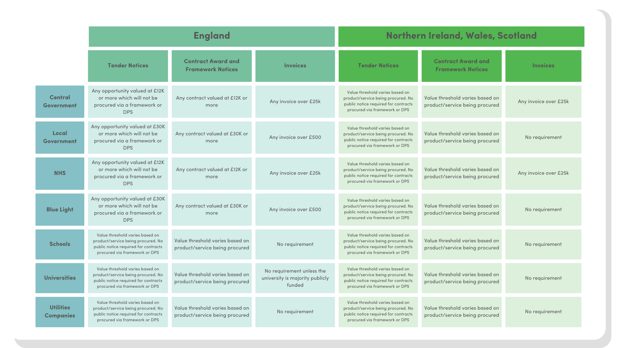
Download our notice publication matrix
* This matrix is for guidance only and should not be treated as legal advice. Thresholds, exemptions and publication duties vary by regime, buyer type and contract category.
Some procurements are exempt from standard publication rules, including certain contracts relating to national security, classified information, defence and utilities. Buyers may also publish notices voluntarily, either to improve transparency or encourage competition.
In practice, publication is inconsistent. Some notices are not published even where a requirement exists, while other opportunities may only be visible through alternative sources such as framework portals.
🔎 How to find tender and contract notices
Suppliers can track public sector tenders and contract notices in three main ways: by monitoring government portals manually, using tender tracking software, or using a public sector market intelligence platform.
Each approach offers a different balance of cost, coverage and insight. Manual portal monitoring may be free, but time-consuming. Tender trackers can make notice monitoring easier, but often provide limited visibility beyond live opportunities. Market intelligence platforms tend to be more comprehensive and offer the richest market insights, but require a larger investment.
The right approach depends on your market, budget, team size and sales strategy - but it is important to understand what each method can and cannot show you.
1. Manual portal monitoring
Manual portal monitoring is the cheapest way to track public sector tenders. Most major notices are published on free-to-access government portals, making this a practical starting point for smaller teams.
However, it can quickly become time-consuming. Suppliers often need to check multiple portals, manage saved searches, interpret different notice formats and filter out irrelevant opportunities manually.
Find a Tender is the main portal for qualifying UK notices, but it is not the only place tenders appear. Depending on the buyer, region and procurement route, opportunities may also be published on devolved, local or sector-specific portals. The official portals for each region are listed below:
.png?width=475&height=267&name=Direct%20NHS%20spending%20with%20IT%20companies%20has%20increased%20by%20216%25%20since%20FY%202016-17%20(9).png)
Manual monitoring can help suppliers spot live tenders, but it will not provide a complete view of the market - especially where opportunities are below threshold, awarded through frameworks, or disclosed outside the formal notice process.
For more details, see our guide to the eight public sector tender portals every bidding team should monitor.
2. Tender Tracking Software Subscriptions
Tender tracking software can help suppliers monitor published public sector tender notices, but it does not provide a complete view of government contract opportunities.
These tools are often presented as a step up from manual portal monitoring. They usually bring notices from multiple procurement portals into one place, then use saved searches, email alerts or AI scoring to help suppliers identify relevant live tenders faster.
The limitation is that most tender trackers are built around published notices. This means they are strongest once a buyer has already gone to market, but much weaker at showing what happened before that point, how the buyer usually procures, which framework agreements they use, who the incumbent suppliers are, or where spend is already flowing.
For suppliers, the risk is not just missing individual tenders. It is building a public sector sales strategy around the most visible part of the market, while competitors use framework intelligence, invoice-level spend data, contract renewal analysis and early buying signals to engage buyers much earlier.
Tender trackers can save time, but they are still a reactive tool. They help suppliers find published tenders; they do not provide the fuller market intelligence needed to understand where public sector demand is emerging, how buyers purchase, and where competitors are already winning work.
3. Market Intelligence Platforms
Public sector market intelligence platforms go beyond tender tracking. Rather than only showing live tender notices, they help suppliers understand how public sector buyers actually purchase.
These platforms can combine framework intelligence, invoice-level spend data, incumbent supplier analysis, contract renewal tracking and early buying signals from public documents such as strategy papers, meeting minutes and policy updates.
For suppliers, the value is not just finding more tenders. It is understanding which buyers to target, how they buy, who they already work with, when contracts may expire, and where future demand is likely to emerge.
Market intelligence platforms usually require more investment than manual monitoring or simple tender tracking software. But for suppliers pursuing serious public sector growth, they provide the context needed to move from reactive bidding to proactive business development.
⏩ Why tracking tenders might not help you win government contracts
Tender tracking can feel like a sensible public sector sales strategy, especially for smaller firms. It is cheaper than a full market intelligence approach and less time-consuming than manually checking multiple portals.
But tender tracking has several key limitations:
1. Many opportunities are never published
Suppliers often assume that tender alerts give them a comprehensive view of public sector opportunities. They do not.
Some opportunities fall below publication thresholds. Some are awarded directly. Some are exempt from standard publication rules, including certain contracts relating to national security, defence or classified information.
Others are poorly disclosed, published late, or only visible later through award notices or invoice-level spend data.
The result is simple: if you only track tender notices, you are only tracking the opportunities buyers choose (or are required) to publish as open (non-framework) competitions.
2. Framework opportunities are often invisible to tender trackers
Frameworks are an increasingly important route to market.Tussell's 2026 Frameworks Report found that they're used to award more than 75% of public sector contract award value in some sectors.
For suppliers, this creates a major visibility problem. If a buyer awards work through a framework you are not on, you may never see the opportunity before it is awarded. In many cases, the first clear signal may be an award notice after the buying decision has already been made.
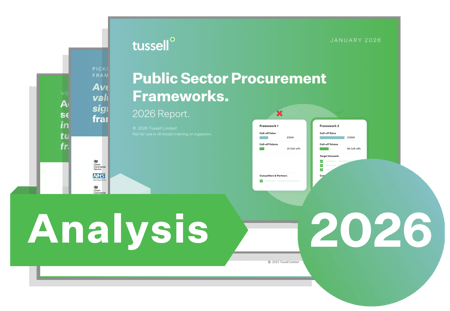
Access Tussell's 2026 Report on the state of public sector procurement frameworks
This means tender tracking tools can miss a large share of the market in framework-heavy sectors. Some tools offer limited framework coverage, but strong framework intelligence requires more than scraping together the small amounts of available information that exist publicly online.
Generally, suppliers need to understand which frameworks their target buyers actually use, what's actually being awarded through them, and when relevant frameworks are due to reopen.
Without that context, opportunities can pass you by before you even know they exist.
3. Bids are often won or lost months before any notice is published
The biggest weakness of tender tracking is timing.
By the time a tender notice is published, the buyer may already have researched the market, spoken to suppliers, shaped its requirements and decided what kind of solution it wants. At that point, suppliers relying on tender alerts are entering the process late.
Tracking pre-procurement notices and attending market engagement events can help. But the most proactive suppliers go earlier still. They monitor buyer strategies, expiring contracts, policy priorities, meeting minutes, policy documents, incumbent relationships and emerging demand signals to identify opportunities before the formal procurement process begins.
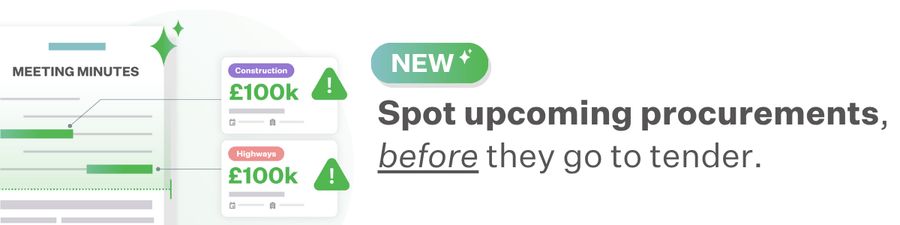
This matters because public sector contracts are rarely won by spotting a tender first. They're won by understanding buyer needs early, building credibility before the competition starts, and positioning your solution before requirements are fixed.
Tender tracking can help you find live opportunities- but it cannot, on its own, help you understand the full market, anticipate demand, or engage buyers early enough to meaningfully increase your chances of winning.
⏩ Where tender tracking is weakest
Tender tracking is especially weak in framework-heavy markets, below-threshold procurements, the NHS (where notices often go unpublished), and innovative markets where suppliers need to shape demand before a formal tender exists.
🚀 How to use tender tracking properly
Tender tracking is useful, but it should be treated as one part of a wider public sector sales strategy - not the strategy itself.
Use tender alerts to monitor live opportunities and stay aware of what is coming to market. But combine it with other signals: framework usage, buyer spending, incumbent supplier relationships, contract renewal dates, early market engagement activity, and other demand signals.
The strongest suppliers do not wait for tenders to appear. They use tender tracking to fill the gaps in their other pipeline building activities - and, of course, to make sure they're submitting bids on time.
🌅 Conclusion: tender tracking is useful - but it is not enough
Tender tracking can help suppliers find live government procurements. But it only shows one part of the market.
Many public sector opportunities are shaped before a tender is published, awarded through opaque frameworks, hidden in invoice data, or missed because publication is inconsistent. For suppliers relying only on tender alerts, that means entering the process late, or missing the opportunity entirely.
A stronger public sector sales strategy combines tender tracking with market intelligence: framework usage, incumbent supplier relationships, invoice-level spend, renewal dates and early buying signals.
That is where Tussell can help.
Tussell's market intelligence platform gives suppliers a fuller view of the UK public sector market, helping teams identify the right buyers, understand how they purchase, spot opportunities earlier and prioritise the bids they are most likely to win.
Want to move beyond tender tracking? Speak to the Tussell team to see how better market intelligence can help you build a stronger public sector pipeline.
FAQs
How do you find government tenders and contracts?
You can find government tenders and contracts by searching official procurement portals, monitoring pre-procurement notices, reviewing contract award notices, tracking framework activity and analysing published invoice data.
Live tender opportunities are commonly published on official procurement portals such as Find a Tender. However, this is only one part of the public sector market. Some opportunities are published on devolved, local or sector-specific portals, while others may only become visible through award notices, framework records or spend data.
For suppliers, the best approach is to track the full procurement cycle: early buying signals, live tender notices, contract awards, framework use, incumbent suppliers, renewal dates and public sector invoice data.
Is Find a Tender the only place to find UK government tenders?
No. Find a Tender is the main portal for qualifying UK public procurement notices, but it is not the only place where government tenders appear.
Depending on the buyer, region, sector and route to market, opportunities may also be published on devolved, local, sector-specific or framework portals. Some lower-value contracts, legacy-rule awards or framework-based opportunities may appear elsewhere, or may not be clearly visible as live tender opportunities at all.
Suppliers relying only on Find a Tender risk missing opportunities published through other portals, awarded through frameworks, or disclosed later through award notices and invoice data.
What are pre-procurement notices?
Pre-procurement notices are notices published before a formal tender is released. They give suppliers early visibility of future procurements and can help them prepare before the buying process begins.
Under the Procurement Act 2023, the main UK pre-procurement notices are Pipeline Notices, Preliminary Market Engagement Notices and Planned Procurement Notices. These notices can show which buyers are planning future procurements, where market engagement is taking place, and when a formal tender may be expected.
Pre-procurement notices are not published for every opportunity, but when they are used, they can provide valuable early signals of public sector demand.
Why is tender tracking not enough to win government contracts?
Tender tracking is useful, but it is not enough because many public sector opportunities are shaped before a tender is published.
By the time a tender notice appears, the buyer may already have researched the market, spoken to suppliers, shaped its requirements and decided which route to market it wants to use. In framework-heavy sectors, suppliers may not see an opportunity at all unless they are already on the relevant framework.
Tender alerts can help suppliers find live opportunities, but they do not provide a complete view of buyer demand, incumbent relationships, framework usage, contract renewals or early market signals.
This is where public sector market intelligence platforms such as Tussell add value. Rather than only showing live tenders, Tussell helps suppliers understand which buyers to target, how they buy, who they already work with, when contracts may expire and where future demand is likely to emerge.
How can suppliers find government contract opportunities earlier?
Suppliers can find government contract opportunities earlier by looking beyond live tender notices and tracking early indicators of public sector demand.
Useful signals include pre-procurement notices, pipeline notices, preliminary market engagement activity, buyer strategies, meeting minutes, procurement plans, expiring contracts, framework usage, incumbent supplier relationships and invoice-level spend data.
This approach helps suppliers identify likely future opportunities before formal procurement begins, understand how buyers purchase, and prioritise the opportunities they are most likely to win.
What is a public sector market intelligence platform?
A public sector market intelligence platform helps suppliers understand government buying behaviour, market trends and routes-to-market - beyond reactive tender monitoring.
Instead of only alerting suppliers to live opportunities, market intelligence platforms bring together data on frameworks, contract awards, invoice-level spend, incumbent suppliers, renewal dates, buyer behaviour and early demand signals. This helps sales and bid teams move from reactive tender tracking to more proactive public sector business development.
Tussell is a public sector market intelligence platform for suppliers selling into the UK public sector. It helps teams identify target buyers, understand routes to market, track competitors and spot opportunities earlier than they could by relying on tender alerts alone.



.png?width=800&height=450&name=Use%20data%20to%20find%20the%20right%20partners%20(11).png)